Red Light Therapy for Skin: What Beginners Should Know
At-home red light therapy devices are becoming more mainstream. Here's what the current research says and what to consider if you're exploring one.
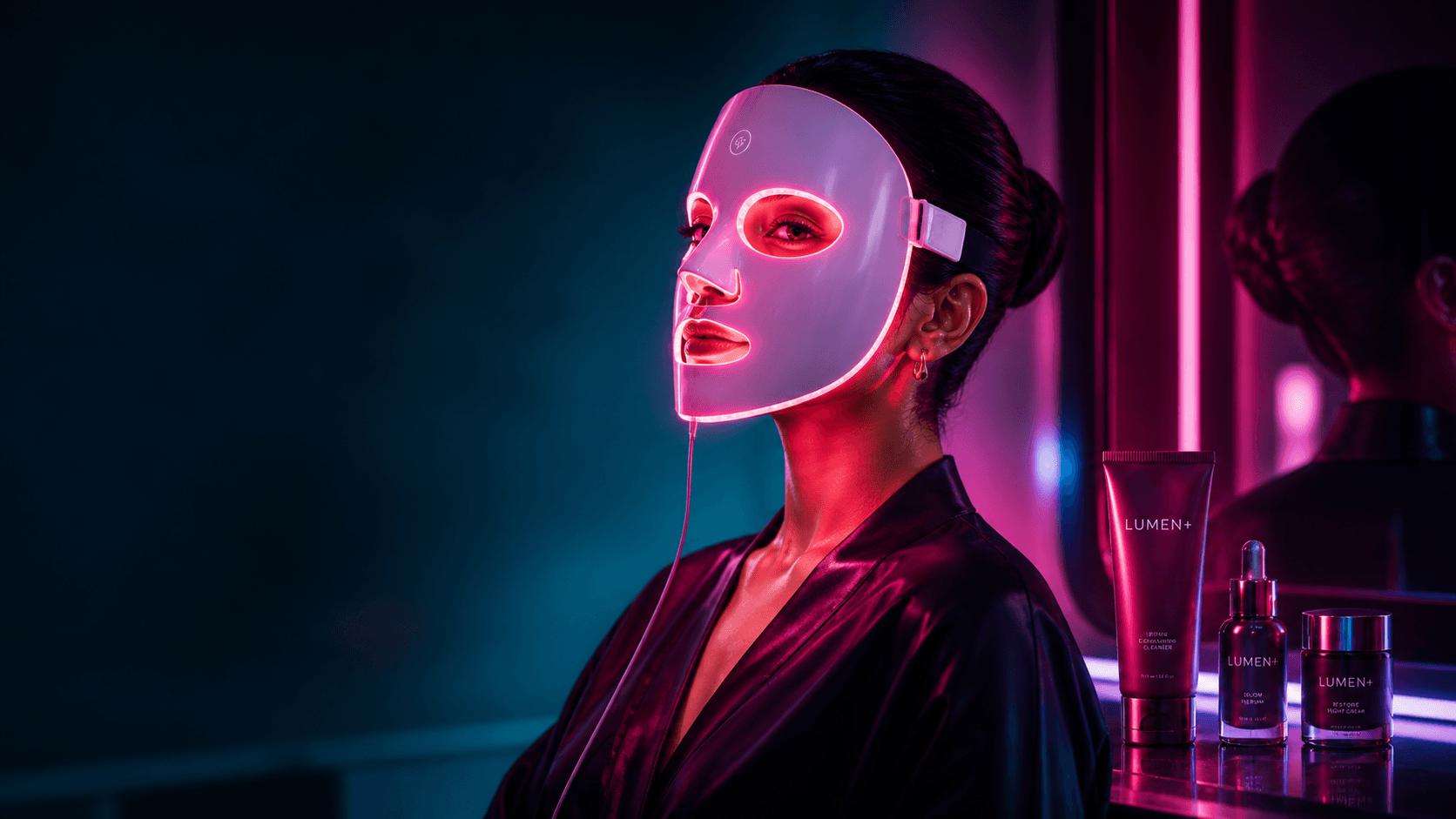
At-home red light therapy devices have moved steadily from professional clinics into consumer skincare over the past several years. The technology has genuine roots in medical research, and some of the evidence for its effects is encouraging — though what has been demonstrated in clinical settings does not always translate directly to a device purchased for home use. This guide offers a plain-language overview of what red light therapy is, what the current evidence suggests, and what to think about before investing in a device.
What Red Light Therapy Is
Red light therapy — also referred to as photobiomodulation or low-level light therapy (LLLT) — involves exposing the skin to specific wavelengths of red and near-infrared light. The wavelengths most commonly used in both clinical and at-home skincare devices fall in the range of approximately 630 to 660 nanometres for red light, and 810 to 850 nanometres for near-infrared.
Unlike UV light, which causes DNA damage at sufficient doses, red and near-infrared light are non-ionising — they do not break down molecules in the same way. The proposed mechanism of action is that these specific wavelengths are absorbed by components within cells, particularly in the mitochondria, where they are thought to influence cellular energy production and signalling pathways involved in inflammation and tissue repair.
What the Evidence Suggests
Red light therapy has the most consistent evidence in clinical wound-healing contexts. Controlled studies have found it may support tissue repair, reduce inflammation, and accelerate recovery in certain conditions. From this medical research base, interest in cosmetic applications has grown, and a body of literature now examines red light therapy for:
- Reduction in acne — partly through anti-inflammatory effects and some effect on acne-related bacteria (blue light has more evidence here, but red light contributes through inflammation reduction)
- Improved skin texture and a smoother appearance
- Reduced visibility of fine lines and wrinkles
- Recovery support following minor cosmetic procedures, where reduced inflammation and faster healing are the goal
Several randomised controlled trials have found measurable improvements in skin texture and fine line appearance with red light therapy. Study sizes tend to be small, and results vary depending on device specifications, treatment protocols, and individual skin response. The evidence is more consistent for higher-powered clinical devices used under professional supervision than for lower-powered consumer products — a distinction that matters when reading marketing claims.
At-Home Devices vs Clinical Treatment
The primary practical difference between clinical red light panels and most at-home consumer devices is power output — often measured as irradiance in milliwatts per square centimetre. Clinical devices used by practitioners typically have higher irradiance and deliver a therapeutic dose of light more efficiently within a given session time.
Most consumer devices operate at lower power levels. This does not necessarily make them ineffective — studies have been conducted on lower-powered devices with measurable results — but it does mean that achieving comparable outcomes may require longer sessions, more frequent use, or a sustained commitment over months rather than weeks.
The at-home category also includes significant variation in quality. An entry-level wand marketed as red light therapy and a panel device from a brand that publishes wavelength and irradiance data are very different products. It is not possible to evaluate effectiveness from marketing language alone.
What to Consider Before Buying a Device
If you are considering an at-home red light device, a few practical questions are worth working through before purchasing:
- Wavelength disclosure. Look for devices that specify the wavelengths delivered — ideally 630–660 nm for red and/or 810–850 nm for near-infrared. Devices that do not disclose this information are difficult to evaluate against the evidence.
- Coverage area. Panel-style devices treat more surface area per session than handheld wands, which may affect how practical a regular protocol is.
- Protocol commitment. Most evidence-backed protocols involve several sessions per week sustained over months. This is not a one-time or occasional treatment.
- Irradiance. Higher irradiance generally means a shorter session time for an equivalent dose. Devices that publish this figure allow you to estimate treatment time; those that do not make it harder to assess value.
- Cost vs evidence. Consumer panels with meaningful irradiance and clear specifications tend to cost significantly more than entry-level options. Very low-cost devices may not deliver the wavelengths or power needed to replicate studied protocols.
Safety Considerations
Red light therapy used at appropriate levels is generally considered low-risk for most people. A few points are worth keeping in mind:
- Eye protection. Looking directly into red light panels can be uncomfortable and potentially harmful over time. Many devices come with protective goggles — use them, and keep eyes closed during treatment near the face.
- Photosensitising medications. Certain medications — including some antibiotics, antifungals, and topical retinoids — can increase the skin's sensitivity to light. If you are on any photosensitising medication, check with a healthcare provider before starting regular light therapy sessions.
- Active skin conditions. If you have a diagnosed skin condition such as eczema, rosacea, lupus, or a photosensitivity disorder, speak with a dermatologist before using red light devices.
- Pregnancy. The evidence on safety during pregnancy is insufficient to support recommendations either way. Most practitioners advise avoiding it as a precaution.
Red light therapy does not replace sun protection. At-home skincare devices do not emit UV light, but UV exposure from daylight and other sources remains a separate concern — and daily SPF remains important regardless of whether you are using red light therapy.
Realistic Expectations
Red light therapy works best as a complement to a solid basic routine, not as a standalone treatment. The evidence suggests it can support skin health when used consistently alongside cleansing, moisturising, and sun protection — rather than as a substitute for established ingredients.
Results, where they occur, tend to be gradual. The studies showing improvements in fine lines or texture typically measure outcomes after several weeks to months of regular use. If you are approaching it expecting dramatic visible change within a few sessions, the evidence does not support that expectation.
Conclusion
Red light therapy has a credible evidence base, particularly in wound healing and some aspects of skin ageing. At-home devices can deliver genuine benefit when the device specifications are meaningful and the protocol is consistent. It is a low-risk option for most people, worth exploring as part of a broader approach to skin health. Choose a device based on disclosed specifications rather than marketing language, commit to a regular protocol, and treat it as an addition to — not a replacement for — the basics.
Sources and Further Reading
- Avci P. et al. (2013) — Low-Level Laser (Light) Therapy (LLLT) in Skin: Stimulating, Healing, Restoring — Seminars in Cutaneous Medicine and Surgery. A widely cited review of the photobiomodulation evidence base.
- American Academy of Dermatology — Skin Care Basics
- U.S. Food and Drug Administration — Products Marketed for Anti-Aging — provides context on how anti-aging claims are regulated and evaluated.
Disclaimer: This guide is for general skincare education only and is not medical advice. If you have persistent acne, irritation, eczema, rosacea, allergic reactions, or a diagnosed skin condition, consider speaking with a dermatologist or qualified healthcare professional.
GlowCart may earn a commission when users purchase through affiliate links, at no extra cost to them.